Direct printing on elastic
Printing on elastic tapes and waistbands considers placement, texture and stretch during use together. A suitable fixture helps hold the elastic in a controlled position.

Pad printing solutions for transferring branding and fixed graphics directly onto underwear and sportswear elastic.

Pad printing solutions for transferring branding and fixed graphics directly onto underwear and sportswear elastic.
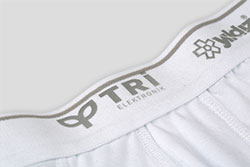
Printing on elastic tapes and waistbands considers placement, texture and stretch during use together. A suitable fixture helps hold the elastic in a controlled position.
Suitable ink, feel and durability are assessed through sample printing on the actual garment. We consider intended washing and stretch conditions with the printing process.
We plan print area, colours, plate, pad and fixture as one system.
Textile Printing MachinesArtwork is positioned with the elastic in its natural state and at its expected stretch during use. Fine detail may lose legibility under high extension. A fixture securing the print area on waistbands or narrow tapes supports repeatable placement.
Ink must suit the elastic’s fibres and surface treatments. Its behaviour under tension, adhesion and wash performance are checked. Resistance to cracking or unlimited stretch is not assumed for every material. Samples determine print dimensions, ink and production settings together.
Share your fabric type, print size, colour count and production requirements. We will assess machine and ink selection together.
Tagless printing on elastic considers tape width, fibre structure and extension during use. Durable small brand and size markings depend on a suitable ink and controlled pad contact.
Fixed branding and symbols on underwear waistbands or textile elastic tapes can be assessed for pad printing. Fibre and coating structure and expected stretch determine the result. Prints are compared under tension and at rest, with adhesion and wash resistance checked on actual samples.
Small brand markings on bra straps or narrow elastic tapes need a positioning arrangement that supports the surface. Tape width and stretch inform plate detail and pad geometry. Logo legibility, repeat positioning and ink flexibility are tested before production.
Size and logo printing on elastane fabrics needs to follow stretch during use. A rigid or insufficiently flexible ink film may crack when deformed. Definition, adhesion and feel are checked under realistic tension and then assessed with the intended washing conditions.
Brand, size and fixed product information can be pad printed inside a suitable waistband area on boxer shorts. The fixture must hold the print area flat, preventing elastic and seams from disturbing pad contact. Stretch during wear and washing conditions guide ink and drying selection.
Brand, size or fixed care information can be transferred onto a suitable inner area of bras and bralettes. Curved parts, seams and elastic components affect pad contact. A support is prepared and flexibility, print feel and use conditions are assessed together on the garment.
Small brand markings and fixed identification information on sportswear can be assessed for pad printing. Polyester ratio, elastane content and exposure to perspiration or friction affect process selection. Artwork size and colour count are planned with the machine configuration and fixture.
For elastic applications, share a photograph and dimensions of the print area, fabric composition, required stretch and washing conditions. Samples are checked for logo and small-text legibility, adhesion and feel after printing. Machine, plate, pad and drying settings are planned around the results.
Fixed washing, drying and other care symbols can be pad printed onto suitable textile areas. Line thickness and spacing must remain legible at the selected size. Content follows the manufacturer’s approved product information, and the sample is checked before plate preparation.
Fixed fibre composition and short product information can be printed inside a suitably sized neckline or garment area. Line count and text size are planned with the fabric texture. Plates and production records are organised by product to prevent mixing up text for different fabric blends.
Fixed origin information can be included on the printing plate with a logo and size. Text must follow the approved product information. Rather than squeezing all content into a small area, a sample is prepared considering legible text size and placement together.
Fixed sizes such as S, M, L and XL can be managed with separate printing plates or a planned production arrangement. Garment size and printed information are checked at changeover. Fixed-plate printing differs from automatically changing serial numbers or barcode data.
Print feel changes with ink film and the area covered. Tagless printing does not mean every application will feel equally soft. Flexibility and feel are assessed on the actual product; ink technical and conformity documents are reviewed against contact conditions.
The ink’s specified drying and waiting time must be completed before assessing wash resistance. Temperature, detergent, drying method and cycle count are defined in advance. The original sample is compared with the washed print to assess adhesion, colour and preservation of fine detail.
Prints on elastic products should also be inspected under stretch. The sample is extended to reflect normal use and checked for cracking, lifting and distortion. The formulation is reassessed if ink flexibility or film thickness is unsuitable.
Prints on sock soles and moving garment areas may experience friction. Sample assessment considers expected surface contact as well as initial appearance. Adhesion, completed drying and fabric texture are assessed together to determine production conditions.
Drying and any curing conditions follow the ink series’ technical data sheet. Fabric heat response and available production time are considered together. A touch-dry print may not have reached its final resistance, so the required waiting time is also included in the process.
Line thickness, letter spacing and fabric texture are assessed together for small size and care text. Plate quality, pad contact and ink consistency affect fine-detail transfer. Artwork is considered ready for production only after a sample at the actual print size has been checked for legibility.
A product-specific fixture supports repeatable printing by holding fabric in a consistent position. Support is adapted where seams, elastic or folds raise the print area. Fabric is held without excessive tension and the position of logos and information is compared across the first and subsequent products.
Dye or finish formulations can change even when fibre composition stays the same. Adhesion, colour appearance and drying are checked again on each new batch. Previous settings can provide a starting point; suitability is verified on a new sample.
Softening, silicone or water-repellent finishes can change ink adhesion. Two fabrics with the same fibre content may print differently, so an earlier formulation is not assumed suitable. A sample from the intended batch is tested for ink spread, drying and durability.