
English
TürkçeEnglishالعربية
SILICONE PRINTING PAD

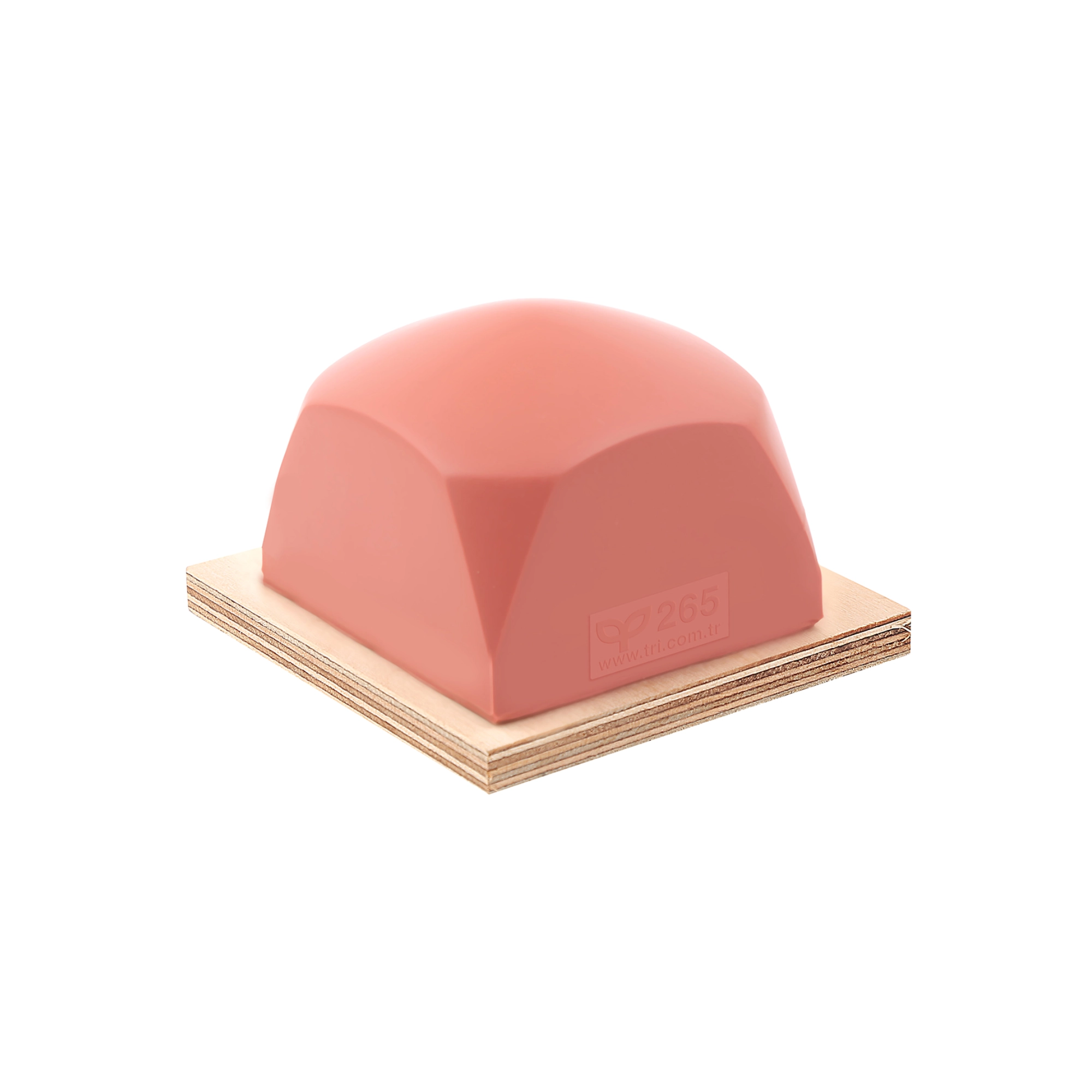
P265 Rectangular Printing Pad

Rectangular silicone pad measuring 73 mm wide, 73 mm long and 69 mm high. Let us assess the model, silicone type and hardness for your textile marking application.

Pad width73 mm
Pad length73 mm
Height69 mm
Request Technical Advice & a Quote
P265 Rectangular Printing Pad 73 × 73 × 69 mm
TECHNICAL SPECIFICATIONS

P265 dimensions and mounting details

Check the pad body and wooden base dimensions. All measurements are in millimetres (mm).

P265 coreless rectangular silicone printing pad 73×73×69 mm, square base
P265 technical specifications
Model NumberP265
Pad ShapeRectangular
Pad Width73 mm
Pad Length73 mm
Pad Height69 mm
Wooden Base Width86 mm
Wooden Base Length86 mm
Core TypeNone
Silicone typesType 01 / Type 05

73 × 73 × 69 mm indicates the physical pad dimensions. The usable print area depends on the artwork, pad compression and machine settings.

P265 for tagless printing

The P265 silicone printing pad transfers ink from the printing plate to the product. Suitability for textile neck labels, size markings and logos is assessed by considering fabric structure, print area, ink and fixture together.

Choose the silicone type and Shore hardness of this coreless rectangular model according to your product sample and production conditions. Its 73 × 73 mm body and 69 mm height must be checked against the machine mounting arrangement and operating clearances.

MATERIAL & HARDNESS

Selected for your fabric and print.

Type 01 / Reddish Brown

A long-life silicone type suited to fast printing. Suitability is assessed with your fabric, ink and production speed.

Type 05 / Blue

A long-life silicone type for standard production. Suitable hardness and surface contact are established through trial printing.

Shore OO options

OO25 · OO30 · OO34 · OO38 · OO42

A hardness scale used for very soft materials.

Shore A options

A3 · A6 · A9 · A12 · A16 · A22

A hardness scale used for medium-hard materials.

Shore OO and Shore A are different hardness scales. Pad selection considers fabric, artwork, ink and fixture conditions together with dimensions.

Get technical support for P265.

Share your artwork, fabric sample and machine details. Let us select the appropriate silicone type and hardness together.

Request Information & a Quote
PRODUCT-SPECIFIC TAGLESS PRINTING

Tagless Textile Printing with P265

P265 is a rectangular silicone printing pad measuring 73 mm wide, 73 mm long and 69 mm high. Suitability for the applications below is assessed using the actual artwork, fabric and machine mounting. Body dimensions do not represent the usable print area.

Tagless printing on T-shirts

Brand, size and fixed care information can be printed directly inside a T-shirt neckline instead of on a sewn-in label. In pad printing, the artwork is prepared on a printing plate and a silicone pad transfers suitable ink onto the fabric. Distance from seams, fabric absorbency and drying conditions are determined together.

Tagless printing on vests

Logos and size information can be pad printed onto a flat area inside a vest neckline. Movement in cotton or blended knit fabrics affects definition. A support that holds the garment without excessive tension and an appropriate ink help achieve consistent transfer of small text.

Tagless printing on underwear

Garment shape and print position are considered together when printing brand, size and care information directly onto underwear. Boxer shorts, vests and briefs may differ in fabric and stretch. Each product therefore requires sample printing to determine its fixture, ink formulation and drying arrangement.

Tagless printing on baby clothing

Size and brand information can be printed directly inside the neck or another suitable inner area of baby clothing. Legibility and print feel are assessed together on soft fabrics. Current technical and conformity documents for the ink are reviewed against contact conditions and the customer’s specification when defining the process.

Tagless printing on cotton fabric

Fibre structure and absorbency affect ink spread and fine detail on cotton. Logos or fixed information are prepared on a printing plate and transferred using a suitable pad. Printing force, ink consistency and drying conditions are tested on the actual fabric to assess legibility and adhesion after washing.

Tagless printing on knitted fabric

The open, flexible structure of knitted fabric can make small text appear broken or blurred. Transfer is controlled using a fixture that holds the fabric evenly and suitable pad contact. Artwork detail, printing pressure and ink consistency are adjusted together and assessed through sample printing.

Tagless printing on blended fabrics

In blends such as cotton-polyester, knit structure and surface treatments affect transfer alongside fibre ratios. Ink, pad and drying conditions are selected using an actual fabric sample. When the supplier or fabric specification changes, production settings are verified on the new batch.

Tagless printing on private-label products

When the same garment is produced for different brands, fixed logos and size artwork can be managed with separate printing plates. Records of plates, colours and print positions simplify brand changes. Serial numbers or barcodes that change with every impression require a different solution from pad printing with a fixed plate.

Selecting P265 dimensions for tagless textile printing

The 73 mm × 73 mm body and 69 mm height of P265 are assessed together with the clearance around the artwork. Small-text placement, pad compression and fabric support are checked in the same trial. Suitability is established with the actual plate and product rather than the model number or external dimensions alone.

Mounting P265 for tagless fabric printing

The specified wooden base is 86 mm wide and 86 mm long; this model has no core. Compare these dimensions with the machine’s pad holder, mounting arrangement and operating clearance. The fixture is prepared considering seams or raised areas at the print position together with pad geometry.

P265 hardness for tagless printing on stretch textiles

P265 is available in Type 01 and Type 05 silicone with Shore OO and Shore A hardness options. Softness alone does not determine quality: deformation, fabric contact and ink release are assessed together. Numbers on different Shore scales cannot be compared as equivalent hardness values.

Tagless printing on pyjamas and loungewear

Size, brand and fixed care information can be printed inside a suitable neckline or waistband on pyjamas and loungewear. A flat support prevents fabric bunching. Softness requirements, small-text legibility and intended washing conditions are assessed together.

Tagless printing on thermal underwear

Size and brand information can be pad printed onto a suitable inner area of thermal underwear. Fabric stretch and surface structure affect adhesion and print feel. Samples are prepared for the intended use and washing conditions; drying settings also consider the fabric’s response to heat.

Tagless printing on woven tapes

Small logos, symbols or short fixed text can be considered for woven tapes. Tape width, raised weave and support beneath the print determine definition. Positioning the tape in a fixture maintains alignment during repeated printing; ink is selected using the actual surface.

Tagless printing on cut fabric pieces

Fixed brand, size or orientation markings can be printed onto cut fabric pieces before sewing. A cut edge or defined reference is used for positioning in the fixture. A production sample confirms that the print will not overlap subsequent seams or folds.

Tagless printing on finished fabrics

Softening, silicone or water-repellent finishes can change ink adhesion. Two fabrics with the same fibre content may print differently, so an earlier formulation is not assumed suitable. A sample from the intended batch is tested for ink spread, drying and durability.

Tagless printing on ribbed fabric

The grooves and stretch of ribbed fabric affect pad contact. Even support reduces unnecessary tension at the print position. Logo detail and text size are assessed against the texture, comparing the print in relaxed and stretched states.

Care symbols in tagless fabric printing

Fixed washing, drying and other care symbols can be pad printed onto suitable textile areas. Line thickness and spacing must remain legible at the selected size. Content follows the manufacturer’s approved product information, and the sample is checked before plate preparation.

Fibre content information in tagless printing

Fixed fibre composition and short product information can be printed inside a suitably sized neckline or garment area. Line count and text size are planned with the fabric texture. Plates and production records are organised by product to prevent mixing up text for different fabric blends.

Wash resistance in tagless textile printing

The ink’s specified drying and waiting time must be completed before assessing wash resistance. Temperature, detergent, drying method and cycle count are defined in advance. The original sample is compared with the washed print to assess adhesion, colour and preservation of fine detail.

Checking cracking on stretch textiles

Prints on elastic products should also be inspected under stretch. The sample is extended to reflect normal use and checked for cracking, lifting and distortion. The formulation is reassessed if ink flexibility or film thickness is unsuitable.

Small-text definition in tagless printing

Line thickness, letter spacing and fabric texture are assessed together for small size and care text. Plate quality, pad contact and ink consistency affect fine-detail transfer. Artwork is considered ready for production only after a sample at the actual print size has been checked for legibility.

Print positioning in tagless textile printing

A product-specific fixture supports repeatable printing by holding fabric in a consistent position. Support is adapted where seams, elastic or folds raise the print area. Fabric is held without excessive tension and the position of logos and information is compared across the first and subsequent products.

Drying in tagless textile printing

Drying and any curing conditions follow the ink series’ technical data sheet. Fabric heat response and available production time are considered together. A touch-dry print may not have reached its final resistance, so the required waiting time is also included in the process.